
In the rapidly evolving market of Nepal, the word "logistics" has moved from the background to the forefront of business strategy. For many growing Nepalese brands and e-commerce startups, there comes a point where managing every delivery, every warehouse shelf, and every return in-house becomes an impossible hurdle.
This is where Third-Party Logistics (3PL) enters the frame. But what exactly is 3PL, and why is it becoming the backbone of the "Digital Nepal" movement?
What is Third-Party Logistics (3PL)?
At its core, Third-Party Logistics (3PL) is the outsourcing of your supply chain and logistics operations to an external provider. A 3PL company acts as a specialized partner that takes over the heavy lifting of moving products from Point A to Point B.
Instead of a business owner renting their own warehouse, hiring drivers, and purchasing a fleet of vehicles, they partner with a provider like Agni Logistics. This allows the business to focus on what they do best, product development and marketing, while the experts handle the "physical" side of the business.
The Evolution of Logistics Layers
To understand 3PL, it helps to see where it fits in the hierarchy:
1PL (First-Party Logistics): The manufacturer or retailer handles everything. You make the goods, and you deliver them using your own van. (e.g., a local bakery delivering its own bread).
2PL (Second-Party Logistics): You hire a specialized carrier just for transport. This is common in Nepal when a wholesaler hires a private truck to move goods from Birgunj to Kathmandu.
3PL (Third-Party Logistics): This is an integrated service. The provider handles transport plus warehousing, inventory management, and order fulfillment. They are a partner, not just a service. This is what Agni Logistics does.
4PL (Fourth-Party Logistics): A consultant-level partner that manages multiple 3PLs. They don't usually own the trucks; they own the strategy and the data.
How Does 3PL Work? (The Step-by-Step Process)
When you partner with a 3PL provider in Nepal, the process is designed to be seamless. Here is how a typical 3PL workflow operates:
1. Inbound Logistics & Receiving
The process begins when your inventory arrives at the 3PL’s warehouse. This could be local stock or international shipments arriving from India or China. The provider "receives" the stock, which involves:
- Physical Inspection: Checking for damage during transit.
- SKU Logging: Every item is scanned into a Warehouse Management System (WMS).
- Customs Coordination: In the Nepalese context, this often involves 3PLs assisting with clearing goods through customs at the border to ensure they reach the central hub without legal delays.
2. Strategic Warehousing and Storage
Once received, your goods aren't just thrown in a corner. They are stored in secure, organized facilities. 3PLs use "shared-user" warehousing.
- Cost-Saving: You only pay for the pallet positions or square footage you actually occupy.
- Environment Control: Specialized 3PLs in Nepal offer climate-controlled storage for pharmaceuticals or electronics, protecting them from the heat of the Terai or the humidity of the monsoon.
3. Precision Order Picking
When a customer clicks "Buy" on your website or sends a message on Instagram, that order data is synced with the 3PL.
- Picking Strategies: 3PLs use methods like Zone Picking or Wave Picking to increase speed.
- Accuracy: Using handheld scanners ensures that the warehouse team picks the exact color, size, and model ordered, which is crucial for maintaining customer trust in Nepal’s growing e-commerce scene.
4. Professional Packing and Kitting
Packaging is your brand’s "handshake" with the customer.
- Dunnage and Safety: 3PLs use professional materials to ensure items survive the bumpy ride on Nepal's highways.
- Kitting: If you are running a "Buy 1 Get 1" promotion or a Dashain Gift Box, the 3PL "kits" these items together on the spot, saving you from having to pre-package everything.
5. Shipping and the "Last-Mile" Challenge
This is where 3PLs prove their worth in Nepal. The 3PL dispatches the package via their internal fleet or a network of local carriers.
- Route Optimization: 3PLs use software to map out the most efficient way to deliver across the Kathmandu Valley or to remote districts like Jumla or Mustang.
- Tracking: Both the merchant and the customer receive real-time updates, reducing the "Where is my order?" phone calls that plague small businesses.
6. Reverse Logistics (Returns Management)
Returns are an inevitable part of retail. A 3PL manages the "reverse" journey:
- Picking up the item from the customer.
- Inspecting it for damage.
- Restocking it if it’s sellable or disposing of it if it’s not.
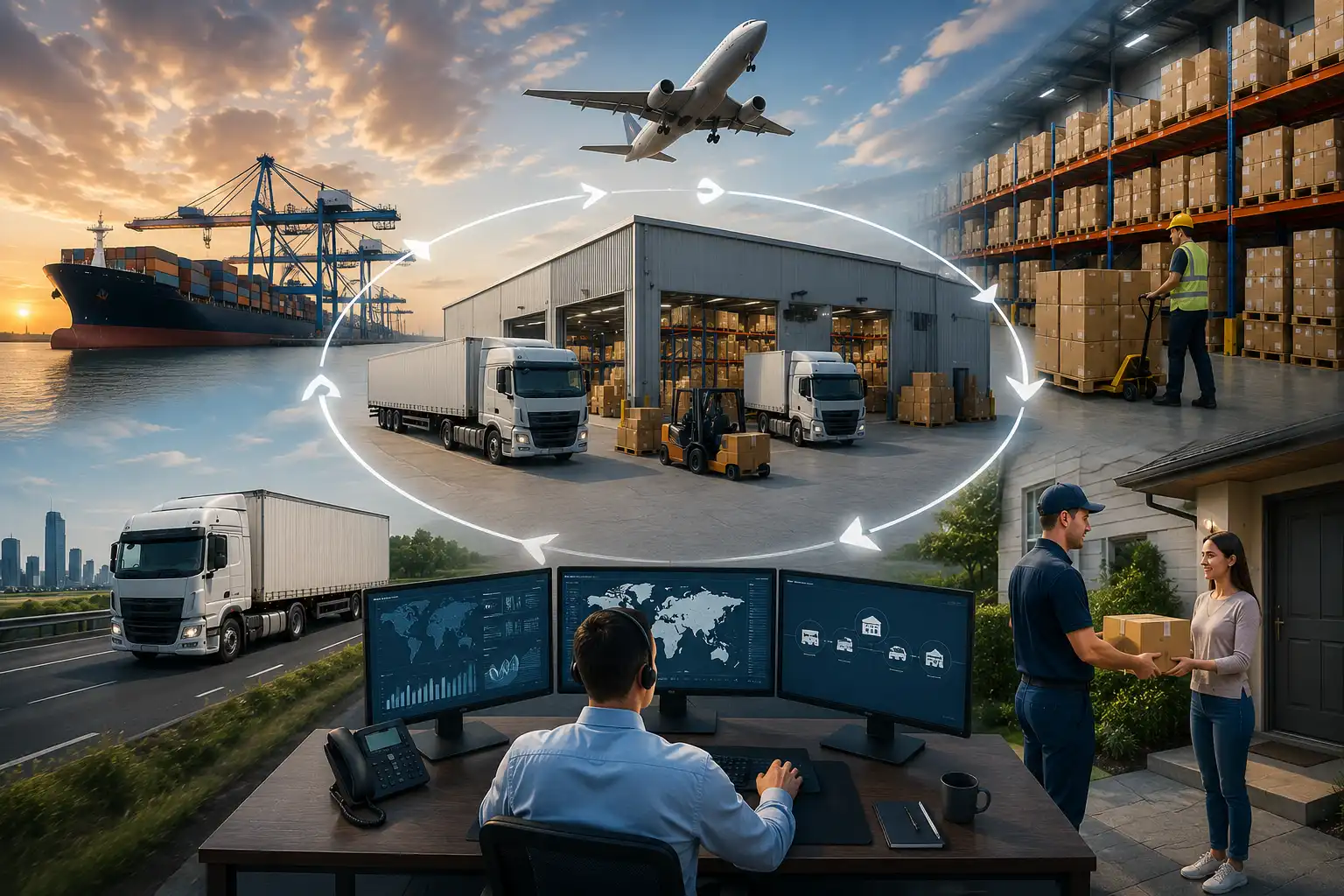
Why 3PL is a Game-Changer for the Nepalese Market
Nepal presents a unique set of logistical challenges that don't exist in the West. From the "Prithvi Highway" bottlenecks to the lack of formal addresses in many residential areas, the complexity is high. Here is why a 3PL like Agni Logistics is a strategic necessity:
A. Converting Fixed Costs to Variable Costs
In a traditional model, you pay for a warehouse and a full-time staff every month, even if you only sell 10 items. With a 3PL, you pay per order and per pallet. If business is slow in June, your costs drop. If business boomed in October, your costs scale with your revenue. This "pay-as-you-grow" model is vital for Nepalese SMEs.
B. Overcoming Geographical Hurdles
Nepal’s terrain is beautiful but brutal for trucks. A professional 3PL has the infrastructure to handle:
- Monsoon Disruptions: Alternative routes and storage hubs to keep goods moving when landslides occur.
- Fuel Shortages/Strikes: 3PLs often have larger fuel reserves and more robust contingency plans than a single business could manage.
C. Enhanced Customer Experience
In a market where "Cash on Delivery" (COD) is still king, trust is everything. A 3PL ensures that deliveries are professional and timely. When a customer receives a package that is well-packed and arrives exactly when promised, they are 70% more likely to become a repeat buyer.
Key Services Offered by 3PL Providers
- Inventory Management: Real-time tracking of what’s in stock.
- Freight Forwarding: Handling large-scale transport, including cross-border shipments.
- Order Fulfillment: The end-to-end "click-to-delivery" process.
- Value-Added Services: Labelling, kitting, and specialized packaging.
| Service | What it Entails | Benefit to You |
| Cross-Docking | Moving goods directly from an inbound truck to an outbound truck with minimal storage. | Reduces handling time and storage costs for fast-moving items. |
| Inventory Forecasting | Using data to tell you when you are running low on stock. | Prevents "Out of Stock" issues that drive customers to competitors. |
| Freight Forwarding | Managing the international transport of bulk goods via air or sea. | Simplifies importing components or finished goods from abroad. |
| B2B & B2C Fulfillment | Delivering to both individual customers and large retail stores. | Allows you to manage your entire distribution network through one partner. |
3PL vs. In-House Logistics: The Cost-Benefit Analysis
Many Nepalese business owners think, "I can just hire a couple of guys with bikes and save money." But is that true? Let’s look at the hidden costs of In-House Logistics:
- Management Overhead: The time you spend managing drivers, fixing broken bikes, and tracking lost parcels is time you aren't spending on sales.
- Liability: If a package is stolen or damaged in your own van, the loss is 100% yours. Many 3PLs offer insurance or shared liability.
- Software Costs: Modern logistics requires tracking software. A 3PL gives you access to enterprise-grade tech that would cost thousands of dollars to license individually.
How to Choose the Right 3PL Partner in Nepal
Not every logistics company is a true 3PL. Some are just "courier companies" with a fancy name. When evaluating a partner like Agni Logistics, ask these five critical questions:
1. Can you handle Cash on Delivery (COD) at scale?
In Nepal, COD is the dominant payment method. Your 3PL must have a secure, transparent system for collecting cash and remitting it to your bank account quickly. Delayed cash flow can kill a small business.
2. What is your "Reach" beyond Kathmandu?
Does the provider have hubs in major cities like Pokhara, Biratnagar, and Nepalgunj? A 3PL that only works in the capital limits your growth potential.
3. Do you integrate with my E-commerce Platform?
If you use Shopify, WooCommerce, or even a custom-built site, your 3PL’s system should "talk" to your website. Manual data entry is the enemy of efficiency.
4. What is your "Shrinkage" rate?
In logistics, "shrinkage" is a polite word for lost or stolen inventory. A professional 3PL should have a shrinkage rate of less than 0.5% and a clear policy on how they reimburse you for lost items.
5. Can you handle seasonal spikes?
Ask them how they handled the last Dashain rush. If they struggled to deliver, they aren't ready to help you scale.
The Future: 3PL and the Rise of "Quick Commerce" in Nepal
We are entering an era of "Quick Commerce," where customers in Kathmandu expect delivery within hours, not days. This level of speed is impossible without a sophisticated 3PL network.
We are seeing the rise of Micro-Fulfillment Centers (MFCs)—small warehouses in Nepal located in the heart of the city that allow 3PLs to deliver orders in under 2 hours. As the digital economy in Nepal matures, the businesses that survive will be those that have offloaded their physical headaches to specialized partners.
Conclusion: Focus on Growth, Leave the Rest to the Experts
The transition from managing your own "Godown" to partnering with a Third-Party Logistics (3PL) provider is one of the most significant milestones in a company’s journey. It represents a shift from a "survival" mindset to a "growth" mindset.
By partnering with Agni Logistics, you are tapping into a network of experts, technology, and infrastructure specifically designed for the Nepalese landscape. You gain the freedom to innovate, the power to scale, and the peace of mind knowing that every package—whether it’s going to a high-rise in Lalitpur or a small shop in Dhankuta—is in professional hands.