
Warehousing often gets overlooked as just “a place to store goods,” but in reality, it’s one of the most powerful drivers of operational efficiency inside modern businesses. Whether you’re running an e-commerce brand, a manufacturing company, or a service-based operation that relies on physical assets, a well-managed warehouse can reduce costs, speed up delivery, improve customer satisfaction, and create a scalable foundation for growth.
In the broader context of Supply Chain Management, warehousing acts as the central hub where inventory, information, and logistics intersect. This article breaks down exactly how warehousing improves business efficiency—and why investing in it strategically can transform your operations.
What is Warehousing in Business?
Warehousing refers to the process of storing goods in a dedicated facility before they are sold, distributed, or used in production. It includes:
- Receiving goods from suppliers
- Storing inventory safely
- Managing stock levels
- Picking, packing, and shipping orders
- Handling returns
Warehousing isn’t just about storage; it’s about control, visibility, and optimization.
The Direct Link Between Warehousing and Efficiency
Business efficiency typically comes down to three things:
- Time
- Cost
- Accuracy
Warehousing impacts all three.
A poorly managed warehouse leads to:
- Delayed shipments
- Lost inventory
- Increased operational costs
A well-optimized warehouse leads to:
- Faster order fulfillment
- Reduced waste
- Better decision-making
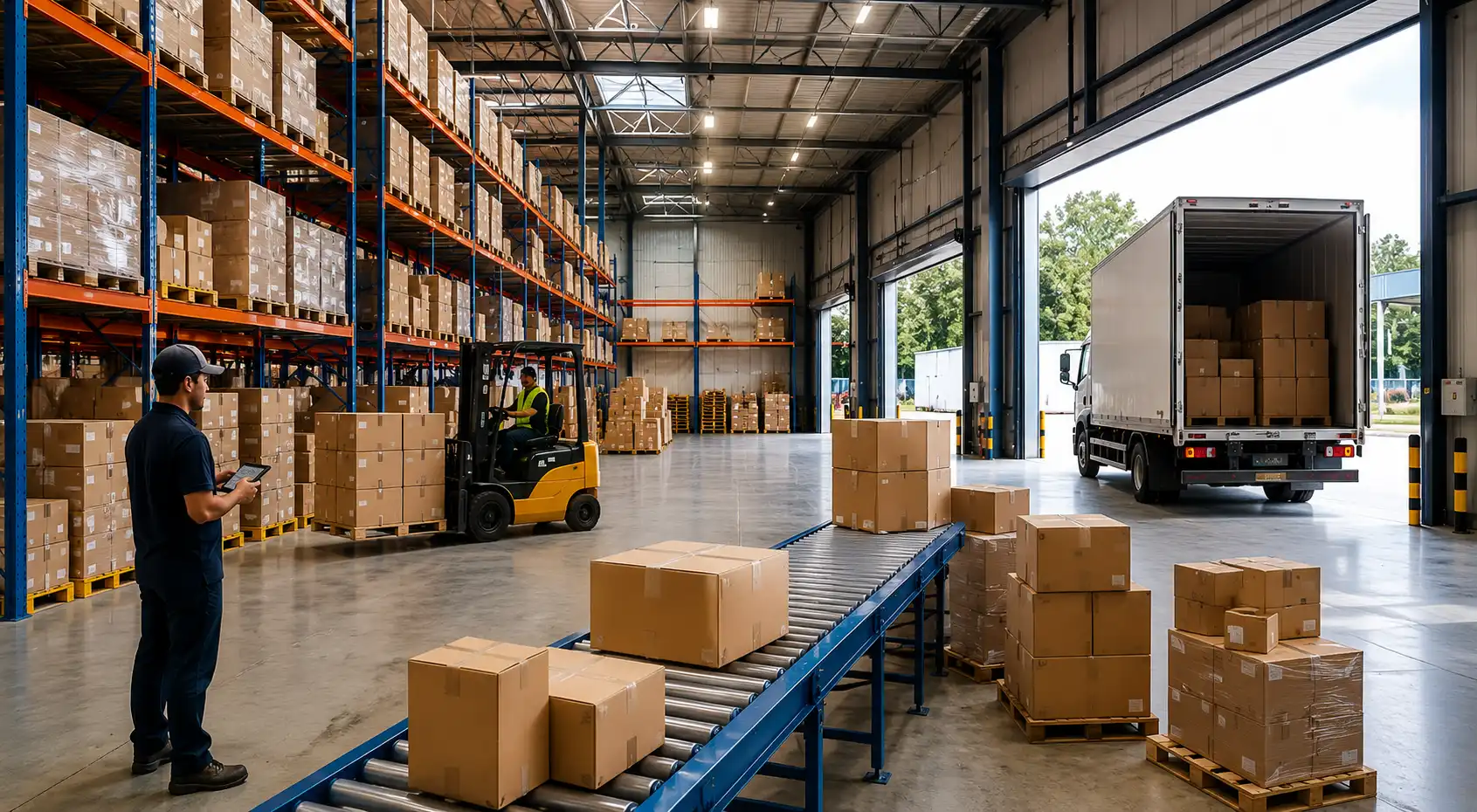
Faster Order Fulfillment
One of the biggest ways warehousing improves efficiency is by speeding up order processing.
How It Works
When products are stored systematically:
- Items are easy to locate
- Picking time is reduced
- Packing becomes faster
Impact
- Quicker deliveries
- Higher customer satisfaction
- Increased repeat business
For example, an e-commerce business with organized shelving and labeling can process hundreds of orders per day without confusion or delays.
Improved Inventory Management
Inventory is one of the biggest cost centers for any business.
Without Proper Warehousing
- Overstocking ties up capital
- Understocking leads to lost sales
- No visibility into stock levels
With Efficient Warehousing
- Real-time inventory tracking
- Better demand forecasting
- Reduced stock discrepancies
Techniques like:
- FIFO (First In, First Out)
- JIT (Just-in-Time)
help maintain optimal inventory levels.
Cost Reduction Across Operations
Warehousing helps businesses cut costs in multiple ways:
1. Bulk Purchasing
With storage space available, businesses can:
- Buy in bulk
- Negotiate better supplier pricing
2. Reduced Transportation Costs
Centralized warehousing allows:
- Route optimization
- Consolidated shipments
3. Lower Loss and Damage
Proper storage systems reduce:
- Breakage
- Theft
- Misplacement
Better Demand Forecasting
Warehouses provide valuable data.
By analyzing:
- Stock movement
- Sales patterns
- Seasonal trends
Businesses can:
- Predict demand accurately
- Avoid overproduction
- Plan resources efficiently
This directly improves decision-making and reduces waste.
Enhanced Customer Satisfaction
Customers care about:
- Fast delivery
- Accurate orders
- Product availability
Warehousing ensures:
- Products are always ready to ship
- Orders are processed quickly
- Errors are minimized
Result:
Higher trust and brand loyalty.
Streamlined Supply Chain Operations
Warehousing acts as a bridge between:
- Suppliers
- Businesses
- Customers
It ensures smooth coordination across the entire supply chain.
Benefits:
- Reduced delays
- Better communication
- Efficient product flow
Without warehousing, supply chains become chaotic and unpredictable.
Scalability and Business Growth
As businesses grow, operations become more complex.
Warehousing allows you to:
- Handle higher-order volumes
- Expand product lines
- Enter new markets
Without a scalable warehousing system, growth leads to inefficiency.
Improved Accuracy and Reduced Errors
Mistakes in order fulfillment can be costly.
Warehousing systems improve accuracy through:
- Barcode scanning
- Inventory management software
- Organized storage systems
This reduces:
- Wrong shipments
- Returns
- Customer complaints
Efficient Returns Management (Reverse Logistics)
Returns are inevitable.
A good warehouse system ensures:
- Quick inspection of returned items
- Efficient restocking
- Faster refunds
This improves customer experience and recovers value from returned goods.
Role of Technology in Modern Warehousing
Technology has transformed warehousing into a high-efficiency operation.
Key Tools:
Warehouse Management Systems (WMS)
- Track inventory in real time
- Optimize storage and picking
Automation & Robotics
- Speed up sorting and packing
IoT (Internet of Things)
- Monitor storage conditions
AI & Analytics
- Predict demand
- Optimize layouts
Even small businesses can adopt affordable digital tools to improve efficiency.
Types of Warehousing and Their Efficiency Impact
1. Private Warehouses
Owned by businesses
- High control
- Suitable for large operations
2. Public Warehouses
Third-party storage
- Cost-effective
- Flexible
3. Distribution Centers
Focus on fast movement rather than long-term storage
4. Smart Warehouses
Use automation and technology for maximum efficiency
Warehousing in Nepal: Practical Insights
Businesses in Nepal face unique challenges:
Geographic Constraints
- Mountain terrain
- Limited infrastructure
Weather Disruptions
- Monsoons
- Landslides
Logistics Delays
- Border and customs issues
How Warehousing Helps
- Stock buffering to avoid shortages
- Strategic warehouse locations
- Better planning for delays
For example, a motorcycle tour company storing spare parts and fuel strategically can avoid disruptions during trips to remote areas like Mustang.
Key Warehouse Optimization Strategies
To maximize efficiency, businesses should:
1. Optimize Layout Design
- Place fast-moving items near dispatch areas
2. Use Inventory Categorization (ABC Analysis)
- A: High-value items
- B: Moderate
- C: Low-value
3. Implement Technology
- Use WMS or inventory software
4. Train Staff
- Efficient picking and packing processes
5. Regular Audits
- Prevent discrepancies
6. Safety and Maintenance
- Reduce accidents and losses
Key Performance Indicators (KPIs) for Warehousing
Track these metrics:
- Order accuracy rate
- Inventory turnover
- Picking speed
- Storage utilization
- On-time shipments
Monitoring KPIs ensures continuous improvement.
Common Warehousing Mistakes to Avoid
- Poor layout design
- Lack of inventory tracking
- Overstocking or understocking
- Ignoring technology
- Inefficient labor management
Fixing these can instantly improve efficiency.
Real-World Example
Scenario Without Proper Warehousing:
- Orders delayed
- Items misplaced
- Customers dissatisfied
Scenario With Efficient Warehousing:
- Organized storage
- Fast dispatch
- Accurate deliveries
Outcome:
Higher profits and smoother operations.
Future Trends in Warehousing
1. Automation
Robots handling repetitive tasks
2. Smart Warehouses
Fully digital and data-driven
3. Sustainability
Eco-friendly storage and packaging
4. Micro-Fulfillment Centers
Smaller warehouses closer to customers
Conclusion
Warehousing in Nepal is far more than just storage; it’s a strategic tool that drives efficiency across every part of a business.
From faster order fulfillment and better inventory control to cost reduction and improved customer satisfaction, the impact of effective warehousing is significant.
Businesses that invest in optimized warehousing systems gain:
- Operational efficiency
- Competitive advantage
- Scalability